Day Six (Thursday 4-17-2025): Grazing, Logging, and Hunting, Oh My!
Up at 6:30 just before breakfast; it is cool and damp, with a thick low overcast that lingered through the night and obscured the tops of the surrounding hills. Since the measured air (dry bulb) temperature is 49°F and the wet bulb temperature is 48°F, relative humidity is about 90%, causing very little evaporative cooling off the wet bulb of my sling psychrometer. This gloomy weather pattern would persist through most of the day as our little weak low-pressure system drifted overhead on its way east. Winds continued light and mostly out of the west.
Today, we focus on ecosystem services (sometimes referred to as natural capital), which are natural resources that provide for human wellbeing and quality of life. Our very health and survival ultimately depend on the health and survival of our ecosystems, which provide clean air and water purification, food, shelter, flood control, pollination, and climate and disease regulation, and a host of other services that would take pages to list.
We meet with Michelle Stehly, a local rancher who joins us at ECCO and will be our escort for this morning’s natural history learning adventures. She is a 3rd generation rancher (since the 1940s) sharing some ranching basics and related facts. She is also a consummate professional with her heart in this, eager to share tons of knowledge and experiences. During spring, it is a five-day trip to move cattle from the San Joaquin Valley to higher-elevation grazing in the Sierra Nevada. Recent research in the Sierra National Forest has changed our views of grazing in our national forests. (BTW, did you know that the term “maverick” came from a nonconformist rancher (Samuel Augustus Maverick) who refused to brand his cattle?) Anyway, we turn onto Road 632 (near ECCO) and wind our way up into the forest toward Soquel Meadow. Here we find a large open meadow surrounded by lush mountain forests, resembling mostly middle and upper montane plant communities.
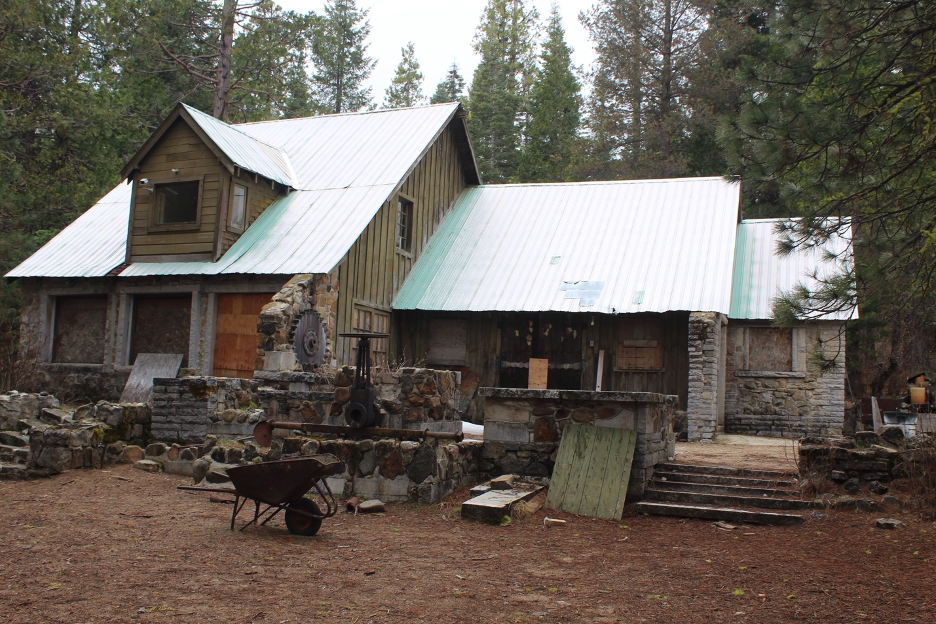
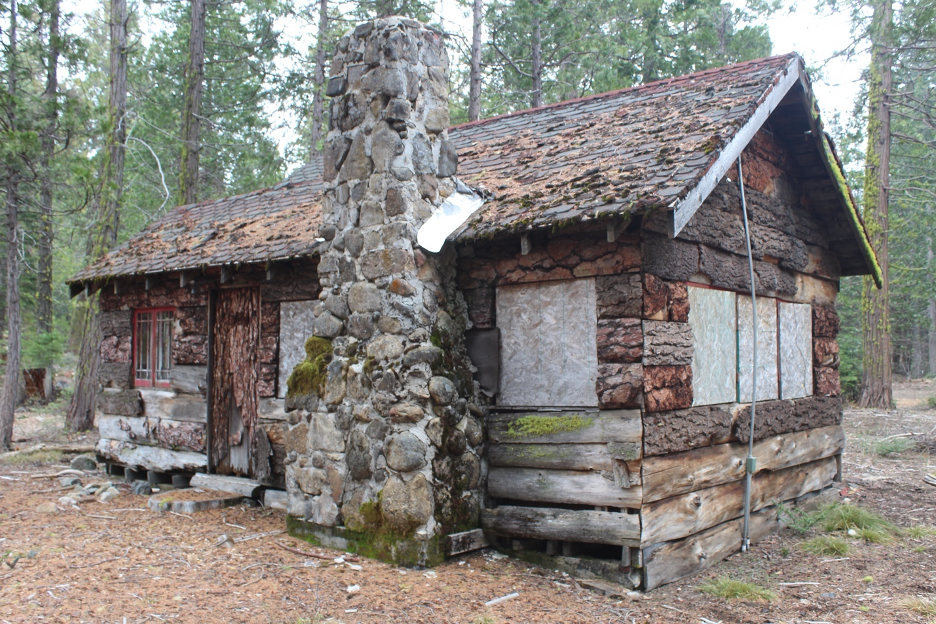
Mule deer are among the few of today’s wild grazing animals that eat through annual ground cover in the Sierra Nevada. But today’s wild ungulates can’t keep up with the growth, which leaves an unhealthy forest loaded with fuels, including excessive stands of ceanothus and other secondary growth waiting for the next conflagration. We learn that Michelle Stehly and company have been evacuated from threatening infernos four out of the last five years to escape some of the largest wildfires in California history. Enter cattle to the rescue? We learn that this cattle business is at least a five-year investment in each cow. The cows become familiar to the routines and mountain environments and the calves learn from their moms. Michelle’s ranch is relatively small (measured in 100’s of head) compared to the big California cattle companies. Her 900 lb. steers (castrated males) sell for about $1,000, while 1,200 lb. steers are worth about $2,000. Heifers (young female cattle) are usually kept for breeding. The buyers are ranchers who “finish” the steers with more grazing and/or in feed lots. Ranching up here has become a precise science as research is showing how controlled grazing and its timing might return nutrients to the soil rather than cause unwanted erosion.
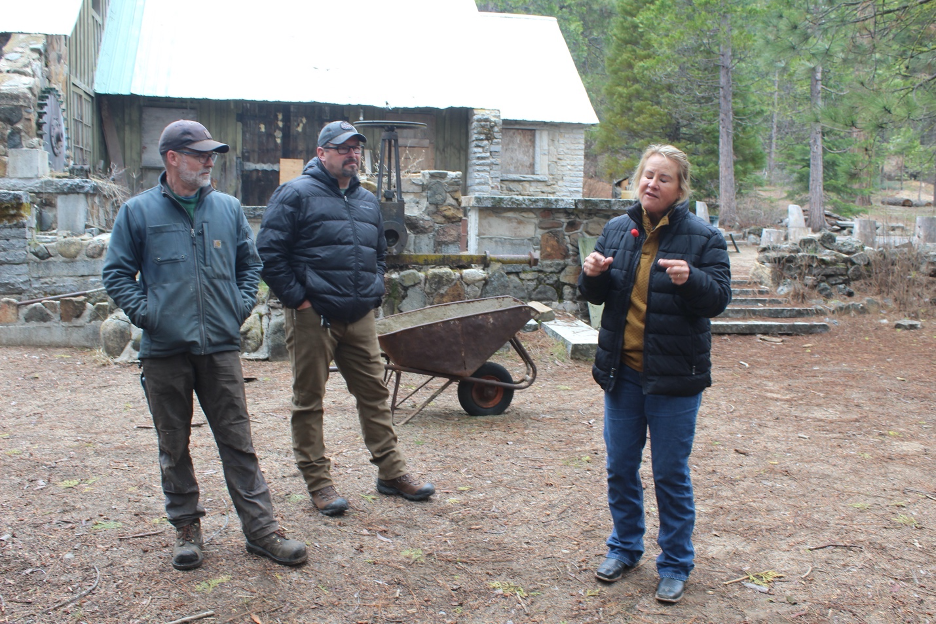
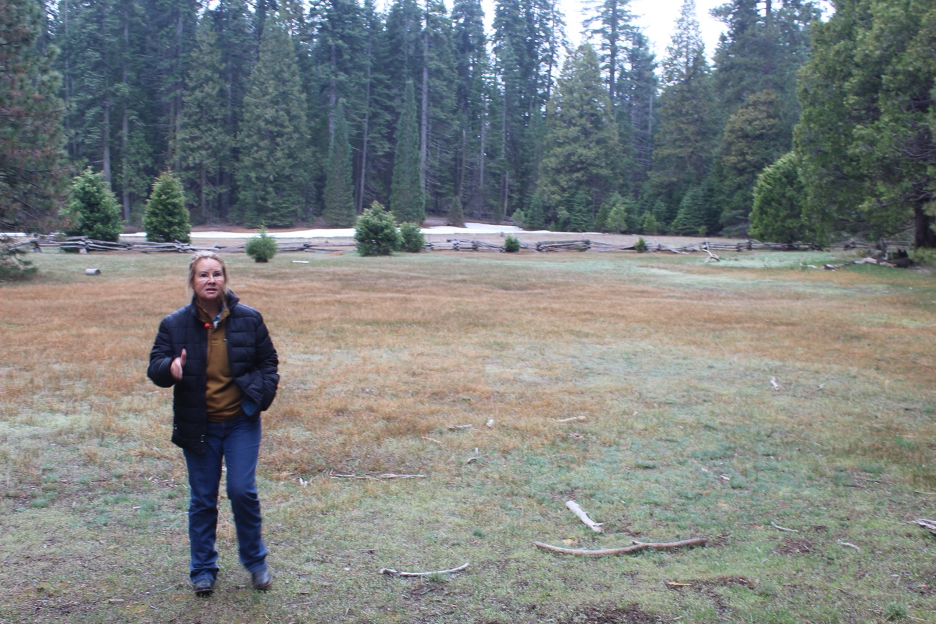
We also meet Michael Jones, the forester who manages this property. He is the “Operations Director for Yosemite Sierra Summer Camp. Michael has been part of the YSSC family since childhood.” Soquel gets its name from the sawmill that was relocated from the coast long ago. People and commerce converged on and just below these mountains during the glory days of logging from the late 1800s through the early 1900s, until the Great Depression. A network of rail lines and flumes were extended into the forest. Even the name Madera (County and San Joaquin Valley city) translates to “wood” or “timber” or “lumber”, as it was put on the map when the California Lumber Company and Central Pacific Railroad invested in the region.
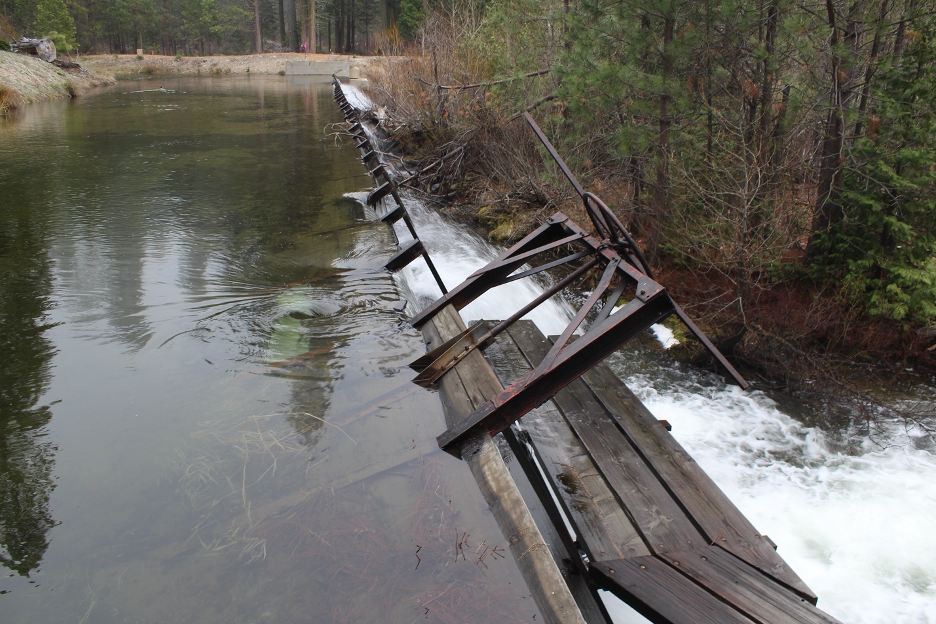
It is difficult to imagine (on such a cool, overcast, moody, misty April day) how the fire that roared past here during the peak of the drought and bark beetle infestations was another big wakeup call, proving how some combination of grazing, logging, and controlled burns will be necessary to return this landscape to more natural cycles. But, as mentioned in previous notes, there are narrow windows of time when control burns are allowed; add geographic limitations. The San Joaquin Valley Air Pollution Control District also restricts the elevations that can be burned based on the oscillating height of each day and night’s inversion layer, which traps smoke. Endangered species further complicate forest management. A short list here includes a lady’s slipper orchid, yellow-legged frogs, Yosemite toads, and fishers. Ethical ranchers, forest managers, and loggers are haunted and reputations tainted by unscrupulous criminals who practice the “shoot, shovel, and shut up” policies that threaten endangered species and have killed keystone species such as eagles and wolves in the western US. This makes rancher Michelle Stehly and forester Michael Jones two stellar role models for those who want to learn how to responsibly manage our ecosystem services and public lands.
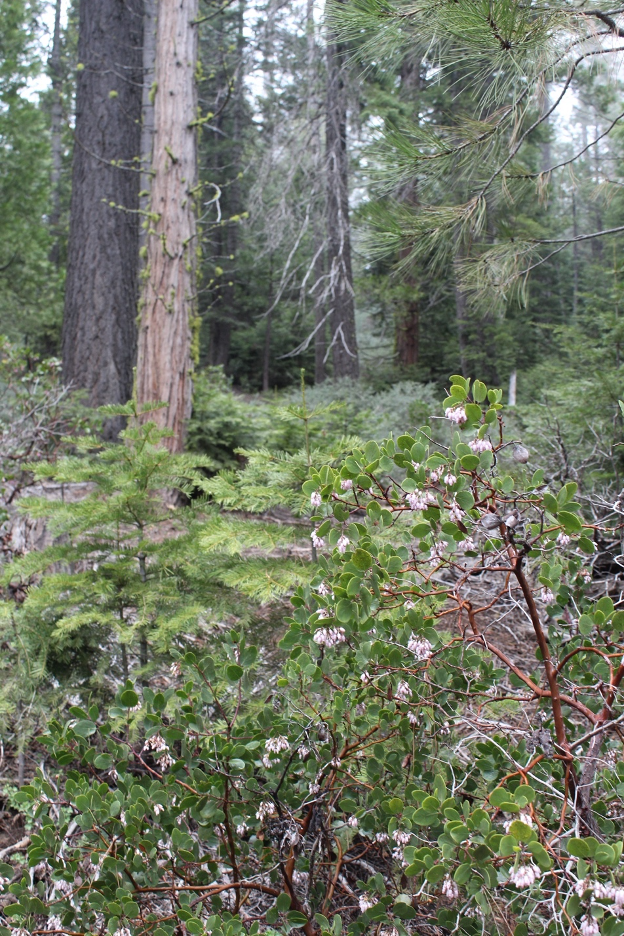
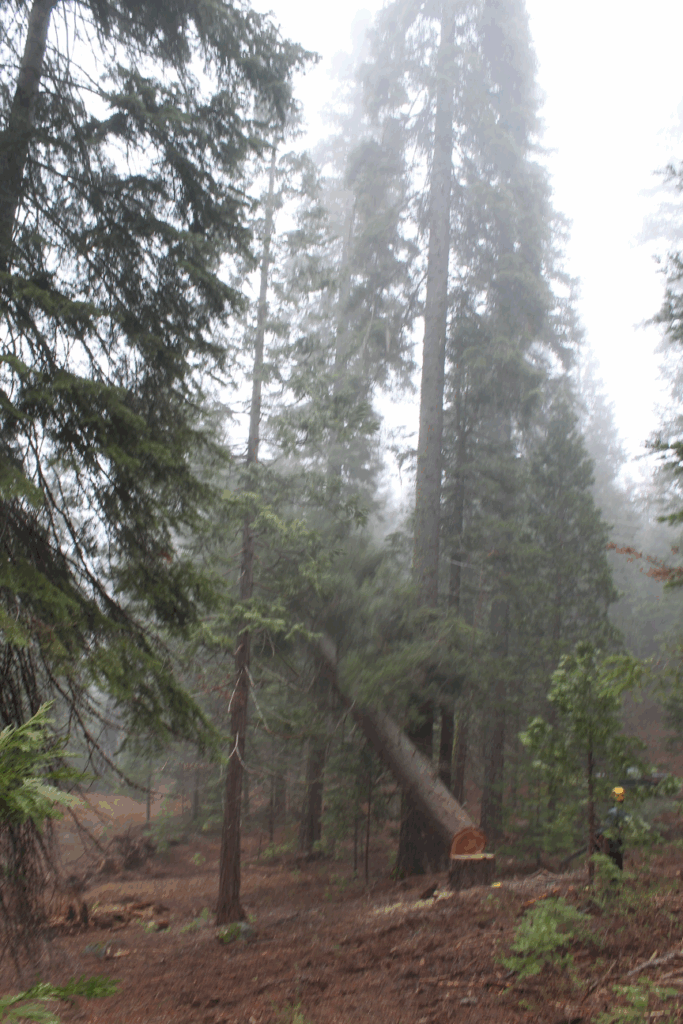
We move on to compare and contrast overgrown forests with those that have been reasonably thinned. Today’s big exhibition is the cutting of one big fir tree. D.B.H. refers to the diameter of the tree at breast height (about 4.5 feet above ground), which allows us to estimate tree size, volume, and value, including the number of board feet contained in each tree. It took about 20 minutes to cut and wedge the conifer so that it fell away from us with a crash, exactly where promised. Counting the exposed tree rings allows us to confirm its age.


It’s time to head back down the long and winding road through the thick low clouds and mist and back to ECCO. We are greeted by Michael Roberts (“Executive Director of ECCO, overseeing camp operations, staff, and facilities to foster learning and personal growth”), who is responsible for keeping this place working. Income from various sources includes the nonprofit Road Scholar programs and other groups looking for a base camp for their education, adventure, and experiential learning in and around Yosemite. The extensive grounds and infrastructure here require constant maintenance and committed caretakers.
Our last night together is the perfect time to appreciate the “What is Treasured is Protected” quote. Clay Newcomb was given credit for saying, “When a resource is culturally valued, it will be protected.” His quote links hunting and conservation, noting how the stories of hunters and the animals they cherish may help to protect those resources.
This leads us to our last after-dinner guest speaker. Sabrina Serena and her family are hunters, falconers, and hunting dog handlers. She starts with a list of the seven hunting ethics that form the North American Model of Wildlife Conservation summarized here: wildlife is conserved and held in trust (we are the envy of the world on this one); commerce in dead wildlife is eliminated, but guides remain valuable; wildlife is allocated according to the democratic rule of law; wildlife is killed only for legitimate, nonfrivolous purposes that include food, self-defense, and protection of property; since animals migrate, wildlife is an international resource; every person has an equal opportunity to hunt and fish; and using scientific research as the foundation, scientific management is the proper means for wildlife conservation, and hunters bring valuable data into that research.
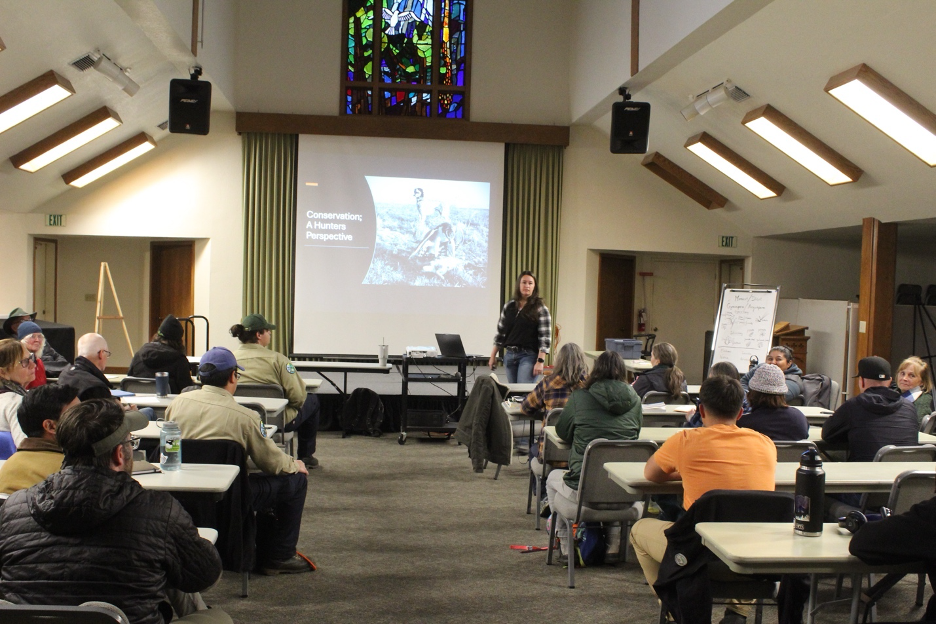
Her colorful show illustrates Sabrina’s devotion to hunting and falconry as she shares some interesting facts. Falconry probably originated in China thousands of years ago. Today’s hunters marvel at falcons’ sharp beaks and their ability to dive (fastest in the world), though their grips aren’t so good. In contrast, hawks’ advantage is their strong and sharp talons. Eagles have reputations as being very mean. Cooper’s hawks are small, smart, and mean. Some prairie falcons have recently been observed hunting for ground squirrels.
Poisonous lead has been introduced into food chains by careless hunters who still use leaded ammunition and by anglers who use and discard fishing lures, sinkers, and other tackle. Such irresponsibility has caused lead contamination, poisoning, and deaths of thousands of species, including some of our most majestic birds, such as California condors. When humans are exposed, it becomes a toxic poison within various organs and the nervous system, causing a host of serious and lingering health problems. Sabrina introduces us to Sporting Lead-Free, “an initiative of hunters and anglers dedicated to maintaining our sporting heritage, wildlife populations, ethics, and rights. We want to achieve positive change within our own sporting communities. Our goal is to increase awareness and education so that hunters can make informed decisions and avoid the top-down, regulatory approach. Our focus is to promote education, not legislation.” Like most responsible hunters, Sabrina Serena wants to conserve and protect the very animals she is hunting, while preserving her freedom in the great outdoors. She is another naturalist role model who has learned how living tough and working hard on the land has lasting benefits.
Click (below) to the final page and day.