Follow our UC California Naturalists experiential learning adventures through and around Yosemite National Park for one week as we explore and research natural history within some of the most spectacular landscapes on Earth. I will play the role of student and occasional teacher during our intense daily dawn-evening action-packed learning experiences from April 12-18, 2025, when we earned our official California Naturalist Certificates.
Why Join the Naturalists?
We can’t survive without access to the fresh air, water, food, shelter, spiritual enrichment, aesthetics, personal restoration, and nature’s other essentials that allow us to celebrate life on this third planet from the sun. Our very physical and mental health depend on nature. But our popular cultures have detached us from Earth’s natural systems and cycles, the very forces and processes that rule our world, resulting in perilous dysfunctions that even AI cannot treat or resolve. And have you checked the news lately? Our nature deficit disorders are having tragic consequences that threaten humans, millions of other species, and the very future of our planet.
The UC California Naturalist statewide natural resource education and service program is coming to the rescue! This extraordinary program fosters “a diverse community of naturalists and promotes stewardship of California’s natural resources through education and service.” They draw you in with refreshing truth telling: “We cannot protect and restore California’s unique ecology without an environmentally literate, engaged public.” … and … “Becoming a naturalist offers a chance to explore nature and deepen your understanding of how nature works.” And then they make you offers you can’t refuse: “Are you interested in nature? Do you love CA’s diverse ecosystems? Embark on an immersive adventure with experts. Deepen your understanding of ecology and forge lasting friendships. This course has graduated career starters through retirees, all learning together to become a community of Certified California Naturalists.” How could we resist this magical week in Yosemite?
Follow Us on this Magical Natural History Tour
Join me on this journey as I share some of our day-to-day discoveries from the experts in the field who live this stuff. Images and excerpts from more than 32 pages of field notes prove that, even after leading hundreds of field classes and field trips with thousands of my students and colleagues over more than three decades, we and I will never stop learning. (The stories here are taken from my personal field notes and some occasional background research. All photos are mine and are not edited or manipulated in any way.) Let your curiosity fly like the clouds and wings over Half Dome in this Yosemite natural history expedition.
Chris Cameron was our organizer, leader, and master instructor for these exceptional learning experiences. Without Chris, a one-of-a-kind tour guide and educator, we wouldn’t be able to retrace our steps because there wouldn’t be any. He demonstrated phenomenal skills in gathering seasoned professionals and curious students together to learn within nature’s living laboratories. And his people skills are the icing on the cake!
Each day of our expedition gets its own page in this story; simply click to the page that matches the day and/or subject. You are encouraged to follow me chronologically to soak in the full benefits. Here’s how it’s all organized:
Day/Page One (Saturday, 4-12-2025): From the Central Valley up to ECCO in Oakhurst
Day/Page Two (Sunday, 4-13-2025): Geology, Creation, and More than 100 Million Years
Day/Page Three (Monday, 4-14-2025): Healthy Forests and Roaring Falls
Day/page Four (Tuesday, 4-15-2025): Cliffs, Bats, Fires, Technology and Botany
Day/Page Five (Wednesday, 4-16-2025): Following the Trail to Native Americans and American Settlers
Day/Page Six (Thursday 4-17-2025): Grazing, Logging, and Hunting, Oh My!
Day/Page Seven (Friday 4-18-2025): Sharing Our Discoveries
Day One (Saturday, 4-12-2025): From the Central Valley up to ECCO in Oakhurst:
A drive north along Hwy 41 from Fresno eventually takes you out of the Central Valley, which shines as the country’s most productive agricultural landscapes. This sprawling valley is vital in making California the number one agricultural state in the nation, as the state generates well more than $50 billion income per year from farm products.
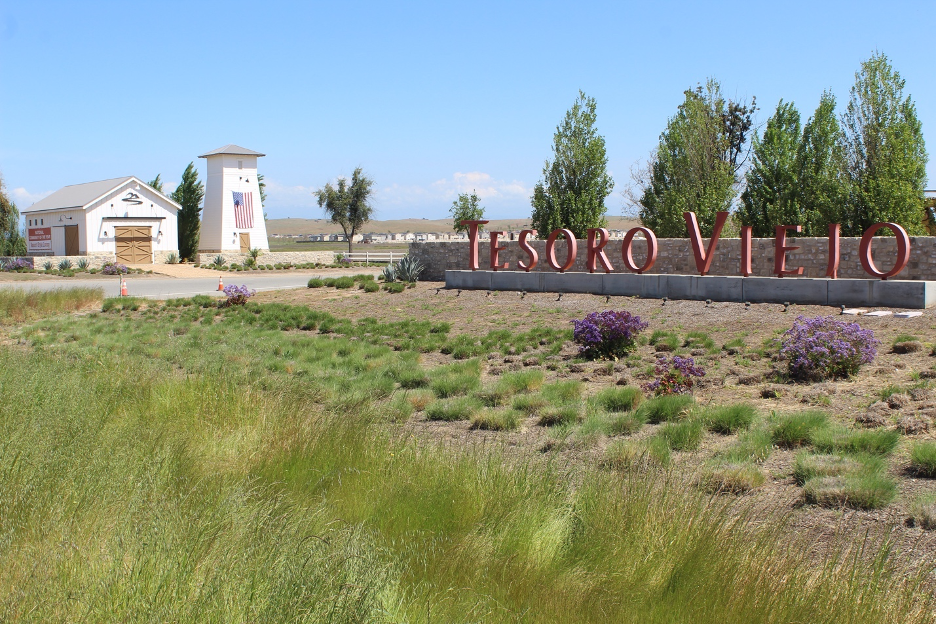
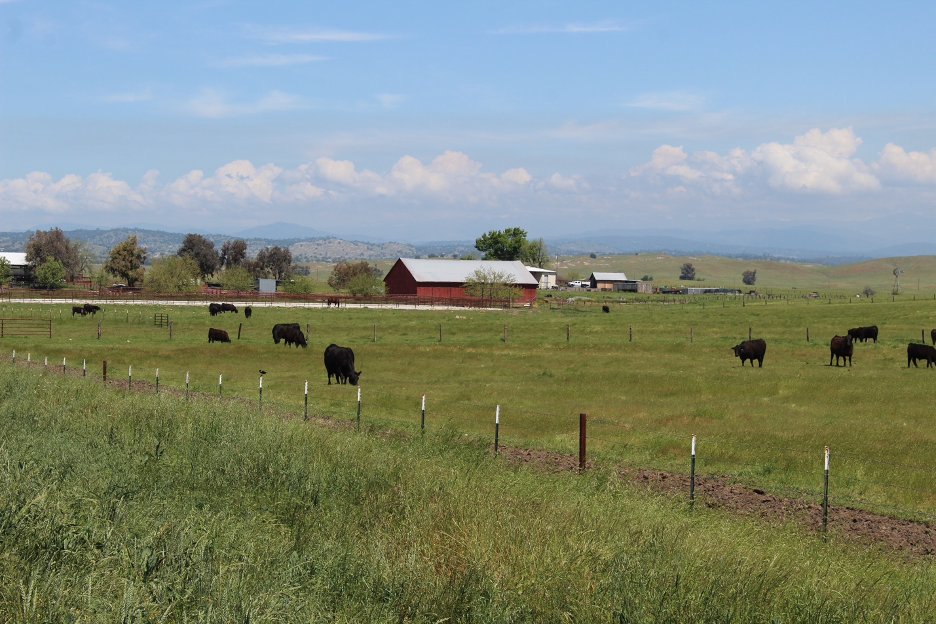
As the road gradually slopes up toward Sierra Nevada foothills, we find ourselves surrounded by open grasslands that recall the vast prairies that once dominated the Golden State’s inland valleys before the Spanish arrived. You will notice cattle grazing on pastoral rolling hills, landscapes occasionally interrupted and sliced by serpentine streams and rivers meandering from east to west, out of higher elevations and into the valley. (These lush narrow riparian strips are what remains (less than 10%) of the broad gallery forests that once extended on both sides of streams and rivers flowing out of the Sierra Nevada.) Today’s hills turn verdant green by April and erupt into rainbow displays of wildflowers such as lupine. But the grasses and flowers will soon dehydrate to the golden browns of punishing summer drought, leaving their seeds in parched soils, waiting for next winter’s rains and next spring’s renewed fantastical displays.

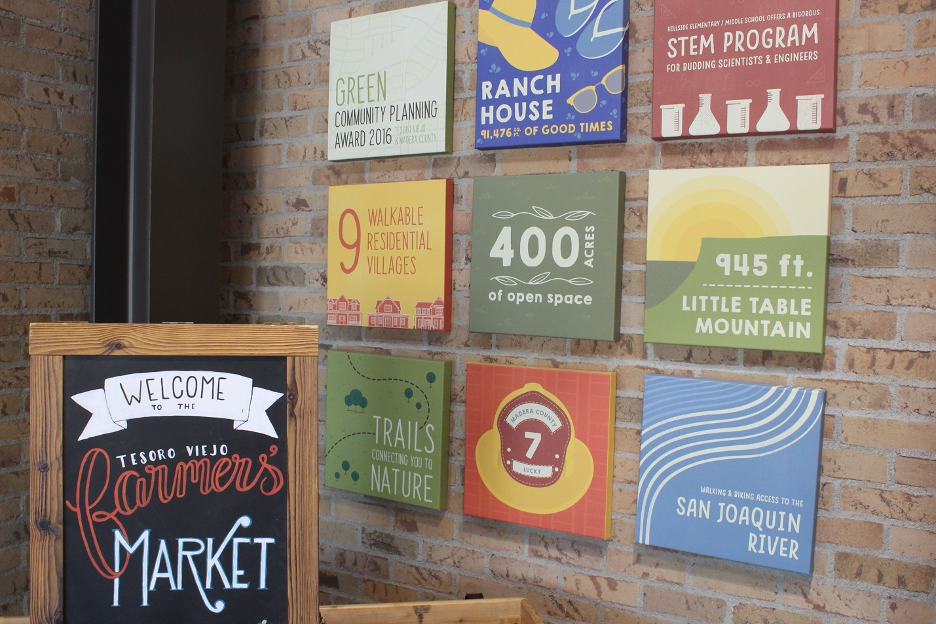
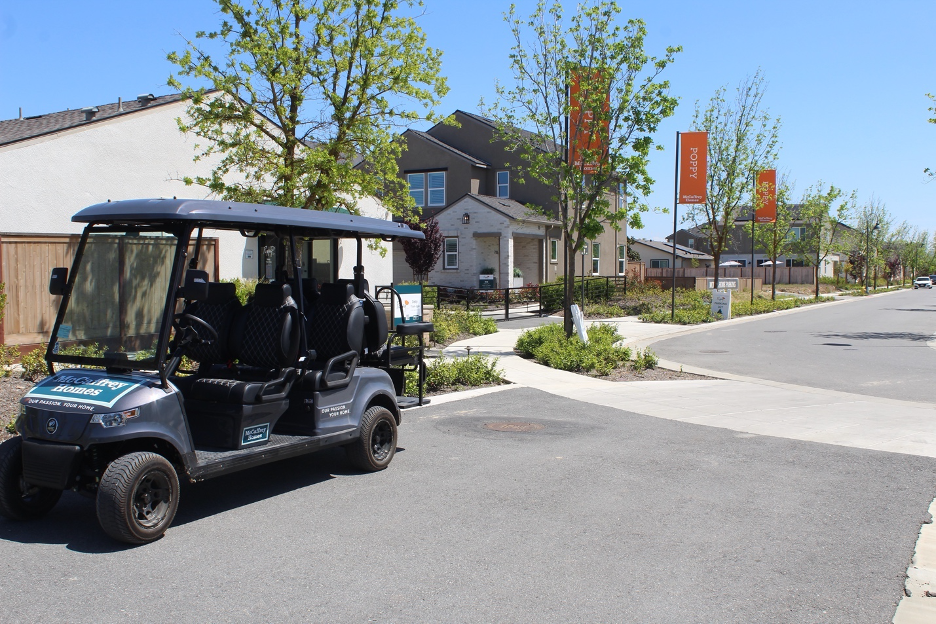
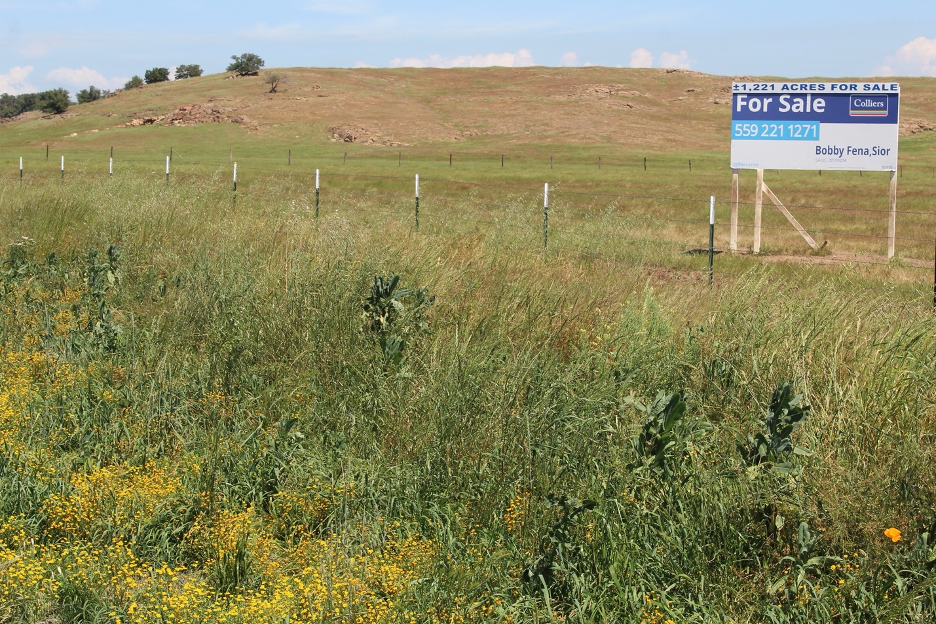
But another invader has recently rivaled the seasonal nonnative grasses on these gentle slopes at the base of the Sierra Nevada Mountains: humans and their developments. Developers are gobbling up some of these landscapes and attracting people who want to escape urban crowds, chaos, and traffic. “Build it and they will come” continues to spread across these landscapes that tourists have been passing by for decades on their way to the high country. Entire wannabe self-sufficient communities have been sprouting and extending over the grasslands and oak woodlands. And the changes are not coming without controversy. As these ecosystems are scraped up and paved, some locals are watching their reasons for living here disappear, while recent arrivals find relative peace and quiet in their perceived bucolic settings. Talk of limited water and other resources, habitat destruction, loss of open spaces, pollution, land values, affordable housing, and increasing traffic congestion is replacing the traditional agrarian discourse and cultures. Such noticeable changes are stretching and then redefining our perceptions of wildland-urban interfaces. The end of this world as we knew it may be just one more development away.

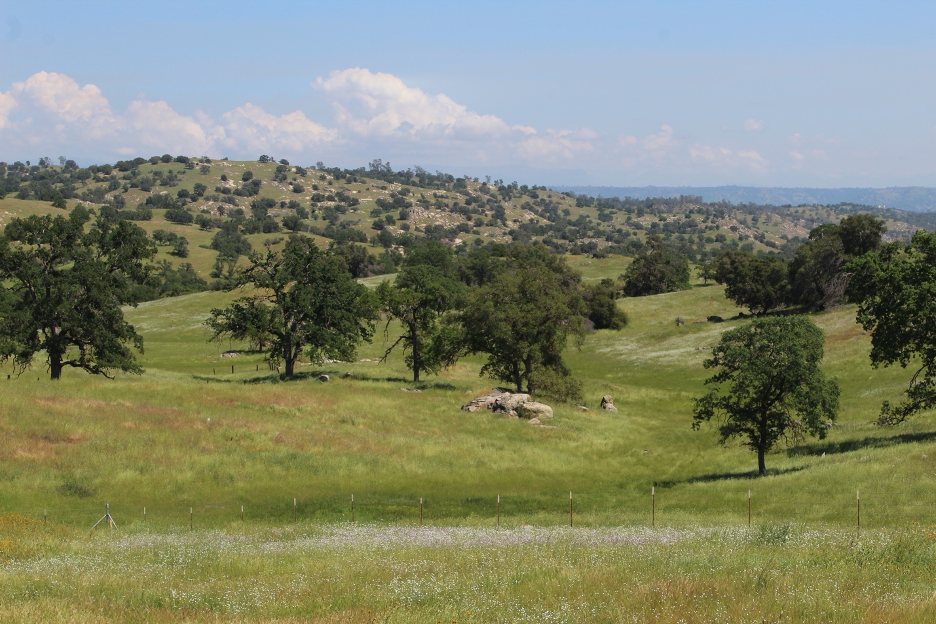
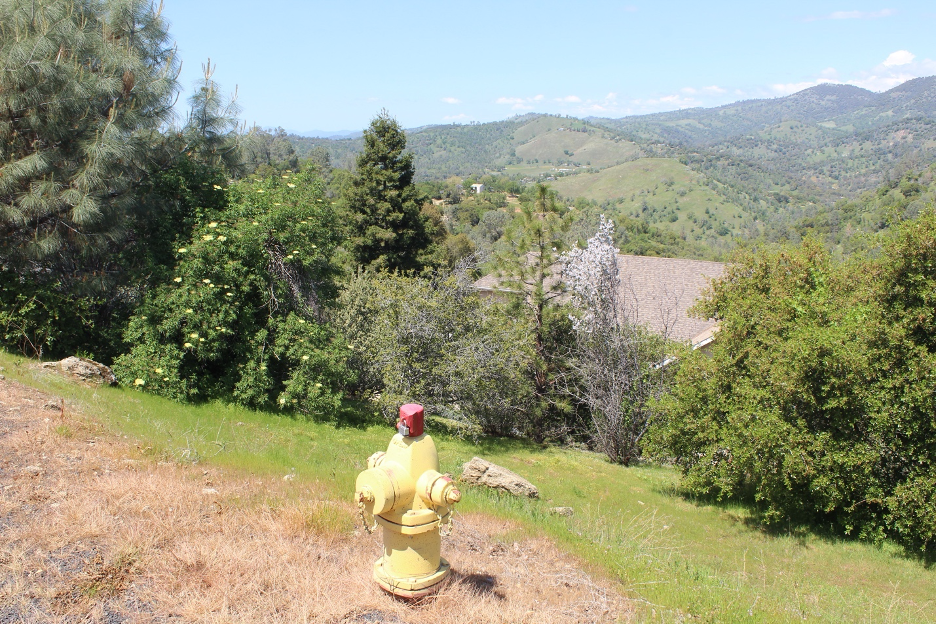
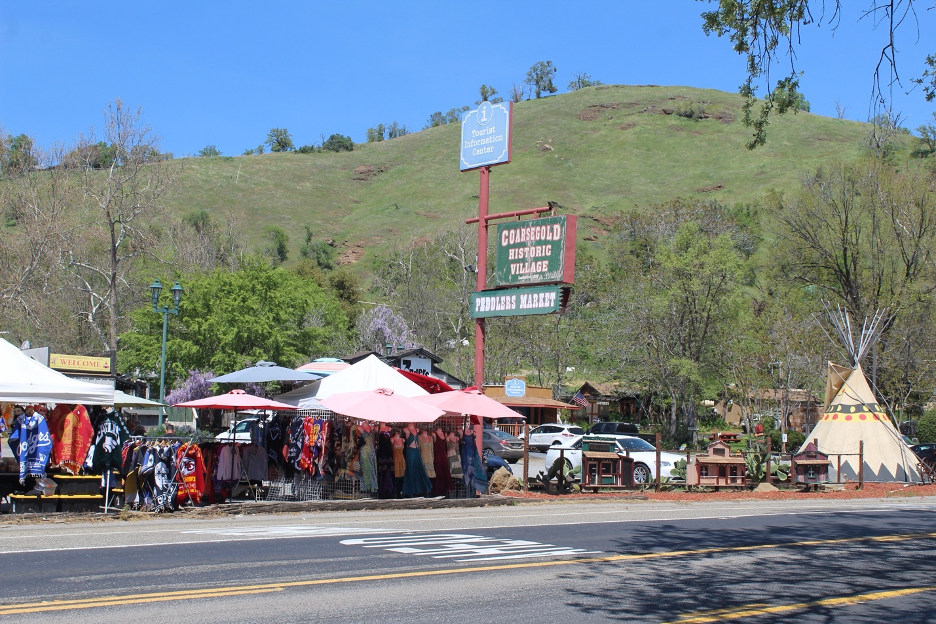
Once we get up above about 1,000’ elevation, where a little more precipitation falls and temperatures are a bit cooler, an assortment of scattered oak trees pops up above the ground cover. At about 2,000’, the woodlands thicken and diversify to include gray pine and other drought-tolerant trees. These scraggly pines with long, grayish needles and big cones often appear bent and twisted as though they were dancing through the night and were suddenly frozen in a pose by the morning light, waiting for summer’s fire or winter’s first merciful rehydrating showers. As we progress higher, slopes tend to steepen and we notice mixed pine forests as we look up toward snow in the distant high country. (We will revisit Sierra Nevada’s vegetation zones in more detail during the next few days.) We drop down into the town of Oakhurst (elevation 2,274’), nestled in its little valley that many consider the gateway to Yosemite. Traveling up and a little farther north, we finally turn off Hwy 41 and will settle, hang our hats, and share tasty meals at ECCO each night, which is a pretty typical option for tour and educational groups looking for base camps in and near Yosemite: “The Episcopal Conference Center Oakhurst (ECCO) has been serving the religious, educational and non-profit conference and retreat needs of Fresno, Madera, Mariposa and the rest of California’s Central Valley since 1982.”
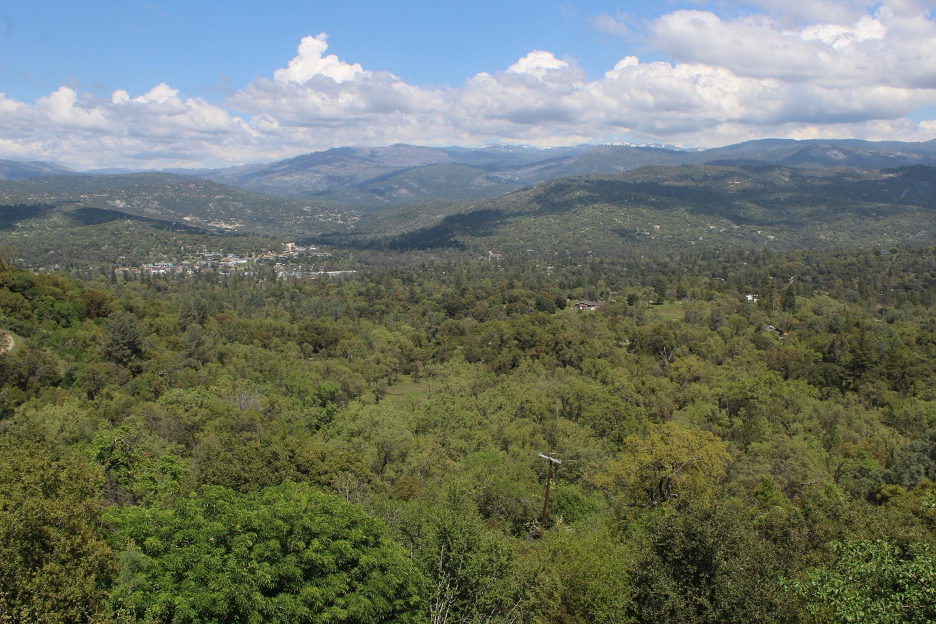
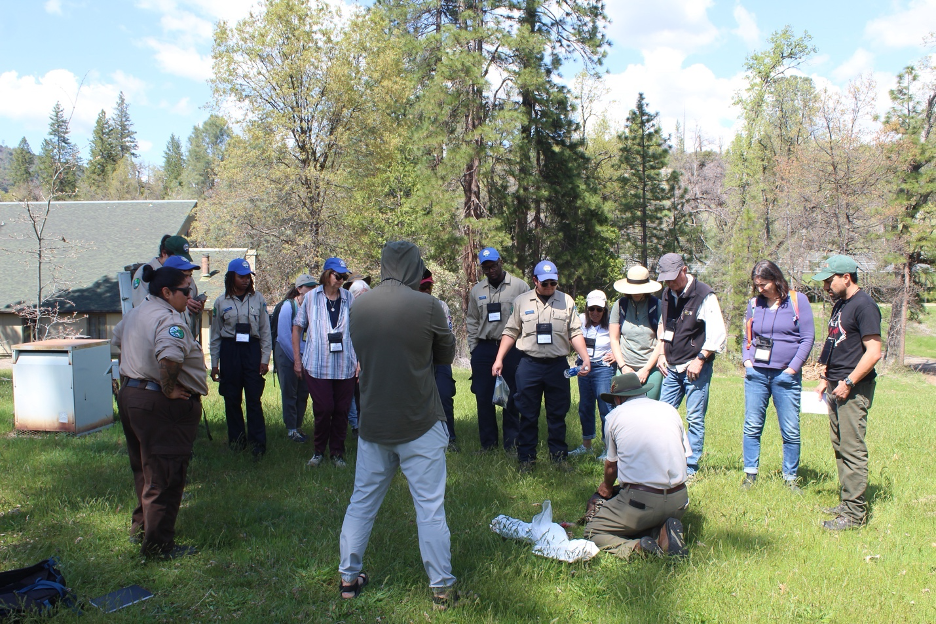
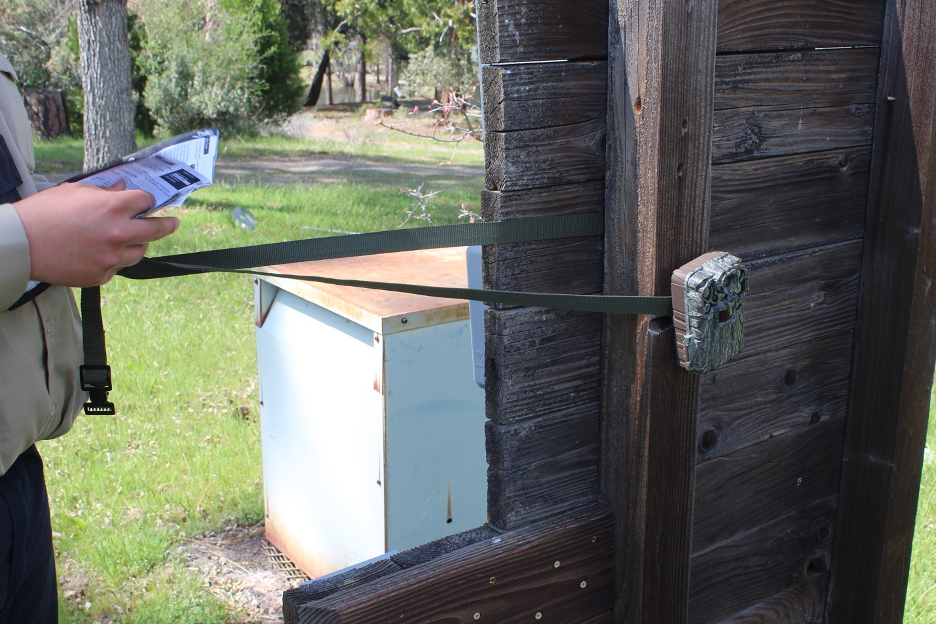
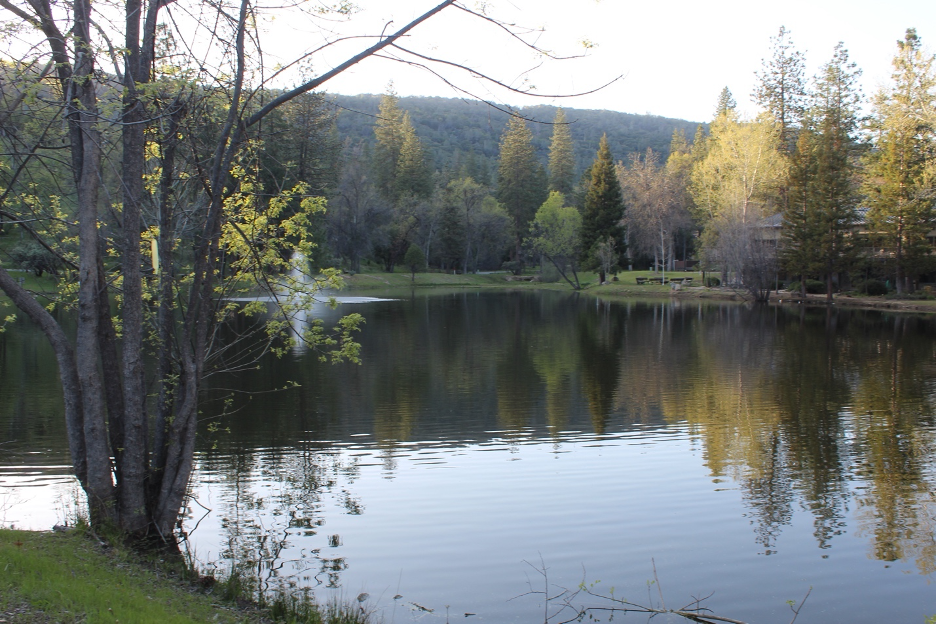
This is where we can hear Yosemite calling from just several miles away. The rolling landscapes in and around ECCO (about 3,100’ ASL) is populated with mostly open oak and pine woodland. The deciduous oak trees are just beginning to sprout by mid-April, careful to avoid any late-season freezes. A giant pond with a fountain demands attention, decorating the property and attracting more than our senses. Depending on the season, an assortment of waterfowl and other wildlife visit or live around the water (more than 100 species of birds have been recorded there), demonstrating animal behaviors that deserve a line or two in our field notebooks.
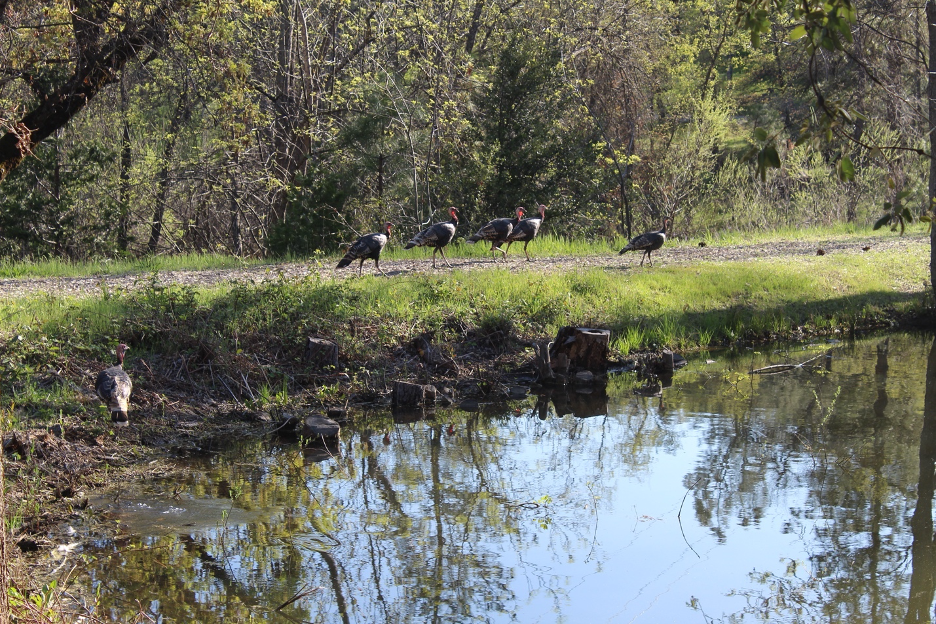
Wild turkeys are particularly entertaining as they dive out of their trees (where they roost at night to avoid predators) early in the morning and trot around during the day. Their toe-walking and dragging one foot in front of the other leaves an arrowhead-like trail. Turkeys are not native to California, but numerous attempts to introduce them finally became successful so that their numbers multiplied since the 1960s until they now total about 250,000 in the state. These omnivores mate and lay their eggs during spring. Gestation takes about a month and they are most vulnerable to predators (such as coyote, bobcats, foxes, some birds, and domesticated animals) after hatching. Adults may become nuisances around humans as they show aggression with their flapping and pecking; their droppings also get pretty messy. They’ve been known to damage gardens and attack their reflections in windows and on the sides of cars.
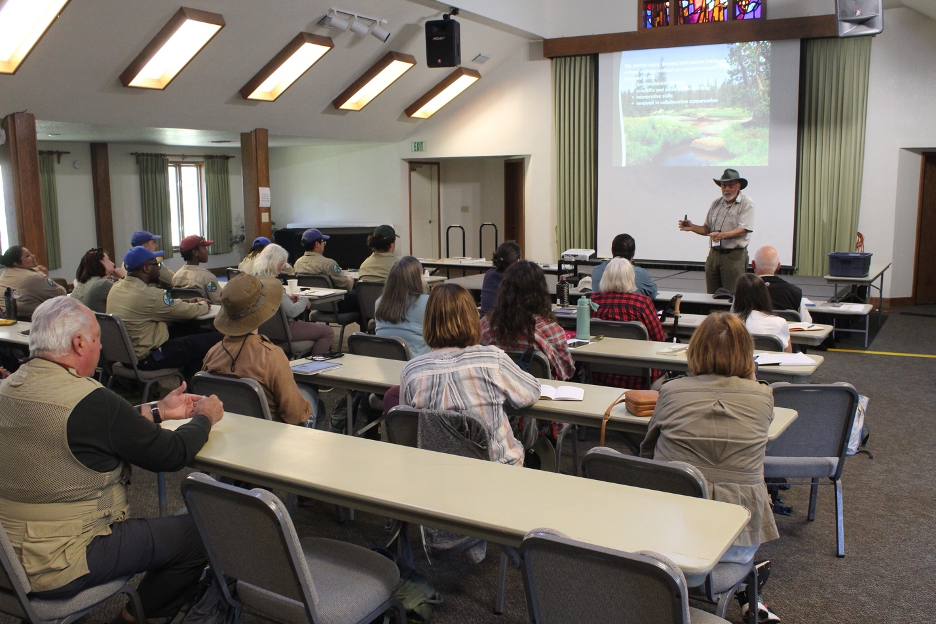
The turkeys remind us that every species of plant and animal, every landscape, rock, cloud, water drop, and weather event have captivating natural history stories to tell. Informative and useful narratives grow from research that connects all of us to our natural world. We can see why this is just one of the naturalist programs across the US. Master instructor Chris Cameron started our course by summarizing how we celebrate biodiversity with environmental literacy, scientific and social understanding, by honing our interpretive skills, and practicing collaborative conservation. We reviewed our state’s bioregions and geomorphic provinces (from page 29 in our required California Naturalist Handbook), which coincide with the physiographic regions we have explored in numerous stories on this website and in my publications. And we recognized how the California Floristic Province, a biological hotspot with its thousands of species that include a large percentage of endemics, is experiencing a biodiversity crises as increasing numbers of those unique plants and animals are threatened with extinction. We recognize how naturalists’ work has become crucial as we observe, communicate, and act to build essential links between scientists and the average person. After dinner, our first day and evening ended with my presentation that summarized some fascinating properties of water and the weather patterns and climates that rule over our plant communities, topics we have highlighted on this website and in my recent California Sky Watcher book and statewide tour.
Click (below) to the next page and day.